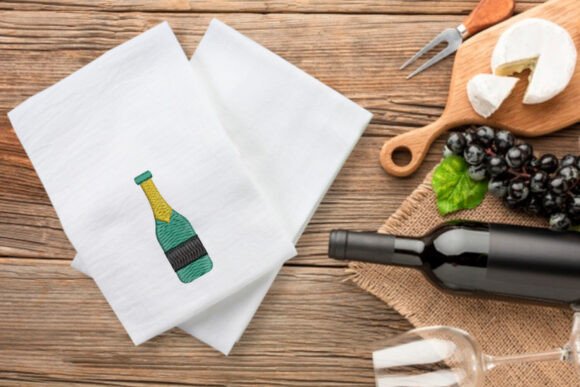
Champagne File Mini Embroidery Review
As an embroidery designer who has spent years turning digital concepts into tactile brand assets, I approach every new file with a mix of curiosity and skepticism. The market is saturated with decorative motifs, but few truly stand out as viable small business merch solutions. Today, I am reviewing the Champagne File Mini Embroidery design. On the surface, it appears to be a simple depiction of a champagne bottle, but for those of us in the apparel decoration and handmade goods industry, the devil is always in the details. This review evaluates whether this specific embroidered patch or logo accent deserves a spot in your production queue.
First Impressions: Elegance Meets Utility
The title suggests a certain level of sophistication. "Champagne" implies celebration, premium quality, and a touch of luxury. When I first loaded the digital embroidery file into my digitizing software, my immediate concern was scale. The package includes five sizes ranging from 1.5 inches to 3.5 inches. This versatility is crucial for modern branding, where a single asset must work across vastly different mediums. Visually, the design feels classic yet approachable. It avoids being overly ornate, which is a common pitfall in wine-themed designs that can look cluttered when stitched at small scales.
For a boutique owner or an Etsy seller, the aesthetic strikes a balance between playful and professional. It does not scream "party," but rather whispers "celebration." This subtlety makes it far more versatile for daily wear items like staff uniforms or everyday tote bags. The clean lines suggested by the description indicate that the digitization likely prioritizes clarity over excessive detail, a smart choice for maintaining legibility on curved surfaces like caps or the cuffs of aprons.
Real-World Business Applications
The true test of any machine embroidery design is its performance in real-world commercial applications. Here is how the Champagne File Mini Embroidery fits into various business contexts:
- Staff Uniforms and Apron Embroidery: For café owners, bakery managers, or florists, this design serves as an excellent chest logo. At 2.5 to 3 inches, it provides enough visual weight to be recognizable without overwhelming the garment. It adds a layer of personality to standard black or white work shirts, transforming generic uniforms into branded experiences.
- Custom Apparel and Caps: Cap embroidery presents unique challenges due to curvature. However, the compact nature of this mini design (especially the 1.5-inch and 2-inch versions) makes it ideal for front panels or side placements. It works particularly well for creative studios or event merchandise where a subtle nod to the theme is preferred over a large, dominating graphic.
- Tote Bag Design and Product Packaging: In the world of handmade products, branding extends beyond clothing. Placing this embroidered patch on canvas tote bags creates a high-perceived-value item. It also serves beautifully as a tag accent on product packaging for candles, soaps, or gourmet foods, reinforcing the brand identity through texture and craftsmanship.
- Etsy Branding and Craft Business Assets: For sellers on platforms like Etsy, visual consistency is key. This design offers a cohesive look that can be applied to hang tags, labels, and gift wrap accents. It helps elevate the unboxing experience, making customers feel they are receiving a premium, handcrafted item rather than mass-produced goods.
Strategic Considerations and Limitations
No design is perfect, and understanding the limitations of the Champagne File Mini Embroidery is essential for avoiding costly production errors. While the design is elegant, there are specific scenarios where caution is advised.
First, consider the stitch density. If the design contains fine outlines or intricate label details on the bottle, these may become illegible at the smaller sizes (1.5 inches). I recommend testing the smallest size on scrap fabric before committing to bulk orders. Tiny lettering or thin lines often merge together during the stitching process, resulting in a muddy appearance that detracts from the brand identity.
Second, evaluate the fabric texture. Embroidery interacts differently with smooth cotton blends versus rough burlap or heavy denim. On highly textured fabrics, the definition of the champagne bottle shape may soften. Additionally, dark uniforms require careful thread color selection. A light-colored champagne gold or pale yellow might get lost against black fabric unless a contrasting underlay or specific thread choice is used. Always inspect the spacing between elements; if the design is too dense, it may pucker lightweight fabrics, ruining the drape of the final finished product.
Impact on Brand Identity and Customer Trust
In the competitive landscape of commercial embroidery, small details signal professionalism. A well-executed embroidered patch conveys durability and attention to detail. When customers see a crisp, cleanly stitched logo on a tote bag or apron, it subconsciously reinforces the idea that the business cares about quality. This visual consistency builds trust and recognition.
The Champagne File Mini Embroidery contributes to a narrative of celebration and care. Whether used by a local winery promoting a tasting event or a home baker celebrating an anniversary, the imagery evokes positive emotions. This emotional connection enhances buyer engagement and encourages repeat purchases. It transforms a simple utility item into a keepsake, increasing the perceived value of your handmade product offerings.
Practical Designer Notes for Production
Before integrating this design into your workflow, follow these practical steps to ensure success:
- Test in Black and White: Convert the design to monochrome in your software. This helps you assess the balance of negative space and stitch coverage without the distraction of color.
- Check Compatibility: The file comes in eight formats including DST, EXP, HUS, JEF, PEC, PES, VP3, and XXX. Ensure your industrial or home machine supports the specific format you intend to use. Verify the hoop size requirements to avoid mid-stitch re-hooping.
- Use Proper Stabilizer: For small patches or delicate fabrics, a cut-away stabilizer is often necessary to prevent distortion. Test your tension settings on a fabric swatch that matches your final product.
- Create a Printable Mockup: Before stitching, generate a high-resolution printable mockup. Place it on images of your actual products (caps, bags, shirts) to visualize scale and placement. This saves time and materials during the approval process.
- Confirm Commercial Licensing: Most importantly, verify the licensing terms. Ensure you have the right to use this design asset for commercial resale. Using unlicensed files can lead to serious legal issues and damage your reputation.
The Champagne File Mini Embroidery is a strong candidate for businesses seeking to add a touch of elegance to their merchandise. Its versatility across sizes and formats makes it a valuable tool in the modern embroiderer’s arsenal. By carefully considering fabric choices, stabilization methods, and brand alignment, you can leverage this design to create memorable, high-quality branded goods that resonate with your customers.