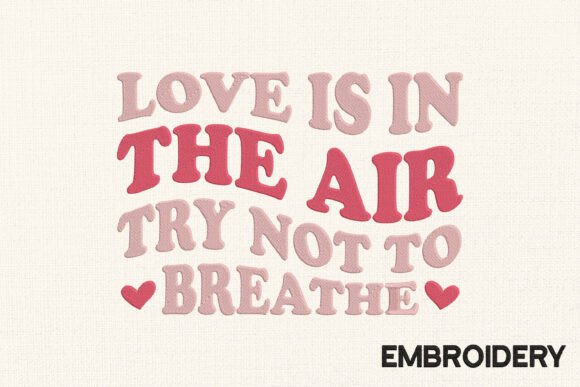
Love is in the Air Embroidery Design Review
As an embroidery designer who spends weekends navigating the chaos of craft fairs and handmade markets, I have learned one hard truth: customers do not buy files; they buy finished products. When I pull up a new digital embroidery file like the Love is in the Air Embroidery Design, my first instinct is not to admire its artistic merit, but to ask how it will perform on a crowded table under harsh fluorescent lights. Does it stop a passerby? Does it look expensive? Can I produce fifty of them without losing my mind?
This review is written for the makers, the Etsy sellers, and the boutique owners who need designs that translate from screen to stitch with clarity and charm. Here is my professional assessment of how this design fits into a commercial workflow for Valentine’s Day.
First Impressions and Visual Appeal
The title Love is in the Air suggests a romantic, perhaps whimsical theme. In the world of machine embroidery design, titles often hint at the visual language used. For a holiday like Valentine’s Day, the market is saturated with heavy reds, literal hearts, and cliché imagery. A successful design needs to stand out while still feeling festive.
Based on the description provided—celebrating the season with style and grace—I anticipate this design leans toward elegance rather than kitsch. This is crucial for modern craft fair trends. Buyers are increasingly drawn to "farmhouse," "soft minimal," or "premium" aesthetics that can be integrated into home decor long after February 14th has passed. If this design utilizes clean lines, delicate lettering, or airy negative space, it will photograph beautifully for your Etsy listings and social media campaigns.
However, we must be realistic about what works at a booth. A design that is too subtle may get lost among bold graphic tees and bright quilts. The best craft fair product designs strike a balance: they are legible from three feet away but reveal intricate detail when held close. If Love is in the Air Embroidery Design offers that kind of versatility, it becomes a powerful tool for engaging potential buyers.
Product Versatility and Market Fit
The true test of any embroidery file is its adaptability. I imagine preparing my display table with a variety of items to see where this design truly shines. Here is how I evaluate its performance across key categories:
- Tote Bags and Market Bags: These are the bread and butter of handmade markets. A tote bag design needs to be bold enough to act as a walking billboard. If the design allows for a large placement or a repeated pattern along the side, it adds significant value. It transforms a plain canvas bag into a statement piece.
- Kitchen Towels and Aprons: Tea towel embroidery and apron embroidery are high-volume sellers. Because these items are smaller and cheaper, buyers are more impulsive. The design must remain clear even when scaled down. If the text or graphics become muddy, the perceived quality drops instantly.
- Hats and Caps: Embroidering on curved surfaces is challenging. A design intended for caps must account for the curve of the front panel. If Love is in the Air Embroidery Design has dense stitching in the center, it might pucker on a baseball cap. However, if it is lighter and centered perfectly, it makes for a premium small shop product.
- Patches and Pouches: Small accessories allow for higher profit margins per square inch. An embroidered patch or a small fabric pouch featuring this design can be sold as add-ons at checkout. These items are perfect for gift-giving, which aligns perfectly with the Valentine’s Day theme.
- Pillow Covers: Home decor items offer a chance to showcase larger areas of stitching. If the design is decorative and soft, it appeals to buyers looking for cozy, romantic accents for their living spaces.
Production Practicality and Quality Control
Before committing to bulk production, I always stress-test a design. The difference between a good design and a profitable one often lies in the technical execution. Here are the critical factors to consider when working with Love is in the Air Embroidery Design:
- Stitch Density and Detail: Check the stitch density carefully. Designs with tiny details or thin lines can break needles or result in thread breaks during fast machine runs. If the design relies on fine script, ensure it is readable at the size you plan to produce. Avoid placing tiny text near edges where stabilizer support might be weak.
- Fabric Texture Compatibility: Not all fabrics play nice. Textured towels or thick denim can obscure fine embroidery. Always test on your actual production fabric. A design that looks crisp on smooth cotton might disappear into the weave of a rustic linen apron.
- Thread Contrast: The color palette matters immensely. On dark fabrics, you need high-contrast threads to maintain visibility. If the design uses light colors on dark backgrounds, ensure the thread weight is sufficient to cover the base fabric completely. Poor coverage screams "cheap," while full coverage signals commercial embroidery quality.
- Hoop Size Constraints: Confirm the hoop size required by the file. If the design exceeds standard hoop dimensions, you will need multi-hooping techniques, which increase production time and risk of misalignment. For weekend warriors, simpler hooping means faster turnaround.
Essential Pre-Production Checklist
To ensure your finished product meets professional standards, follow these steps before listing anything online or taking it to a market:
- Test on Scrap Fabric: Never run a new design directly onto saleable inventory. Use scraps to check tension, thread behavior, and overall look.
- Review Spacing and Placement: Ensure the design fits well within the boundaries of your chosen blank product. Off-center designs look amateurish.
- Use the Right Stabilizer: Heavy designs require cut-away stabilizers to prevent puckering over time. Lighter designs may work with tear-away, but wash tests are essential.
- Create Printable Mockups: Before sewing, create a printable mockup or digital preview. This helps you visualize how the design interacts with different fabric colors and textures without wasting materials.
- Confirm Commercial Licensing: Most importantly, verify that you have the rights to sell physical goods made from this design asset. Selling unauthorized designs can lead to legal issues and account bans on platforms like Etsy.
Strategic Display and Sales Impact
When setting up your booth, the way you present your handmade product influences perception. A well-executed Love is in the Air Embroidery Design should be displayed prominently. Use mannequins for hats and bags, and lay flat items neatly to show the full scope of the embroidery.
Consider creating a "gift set" display. Pair a matching apron and tea towel, or a tote bag with a small pouch. Bundling items increases average order value and showcases the versatility of the design. Customers love seeing how a single aesthetic can unify a collection of household goods.
Furthermore, the emotional resonance of the design plays a role. Valentine’s Day is about connection. If the design feels warm, inviting, and thoughtfully crafted, it encourages buyer engagement. People want to support artisans who care about quality. A crisp, well-stitched design demonstrates that care, justifying a premium price point.
Final Verdict
The Love is in the Air Embroidery Design has the potential to be a standout item in your Valentine’s Day lineup, provided it is executed with technical precision. Its versatility across multiple product types—from practical kitchen textiles to fashionable accessories—makes it a valuable addition to your design assets. By paying attention to stitch density, fabric choice, and presentation, you can turn this digital file into tangible success at your next craft fair or online store.
Remember, the goal is not just to embroider a design, but to create a product that resonates with your customer. Test thoroughly, produce consistently, and let the quality of your work speak for itself. Happy stitching!